Welcome Our Company!


 Send Inquiry
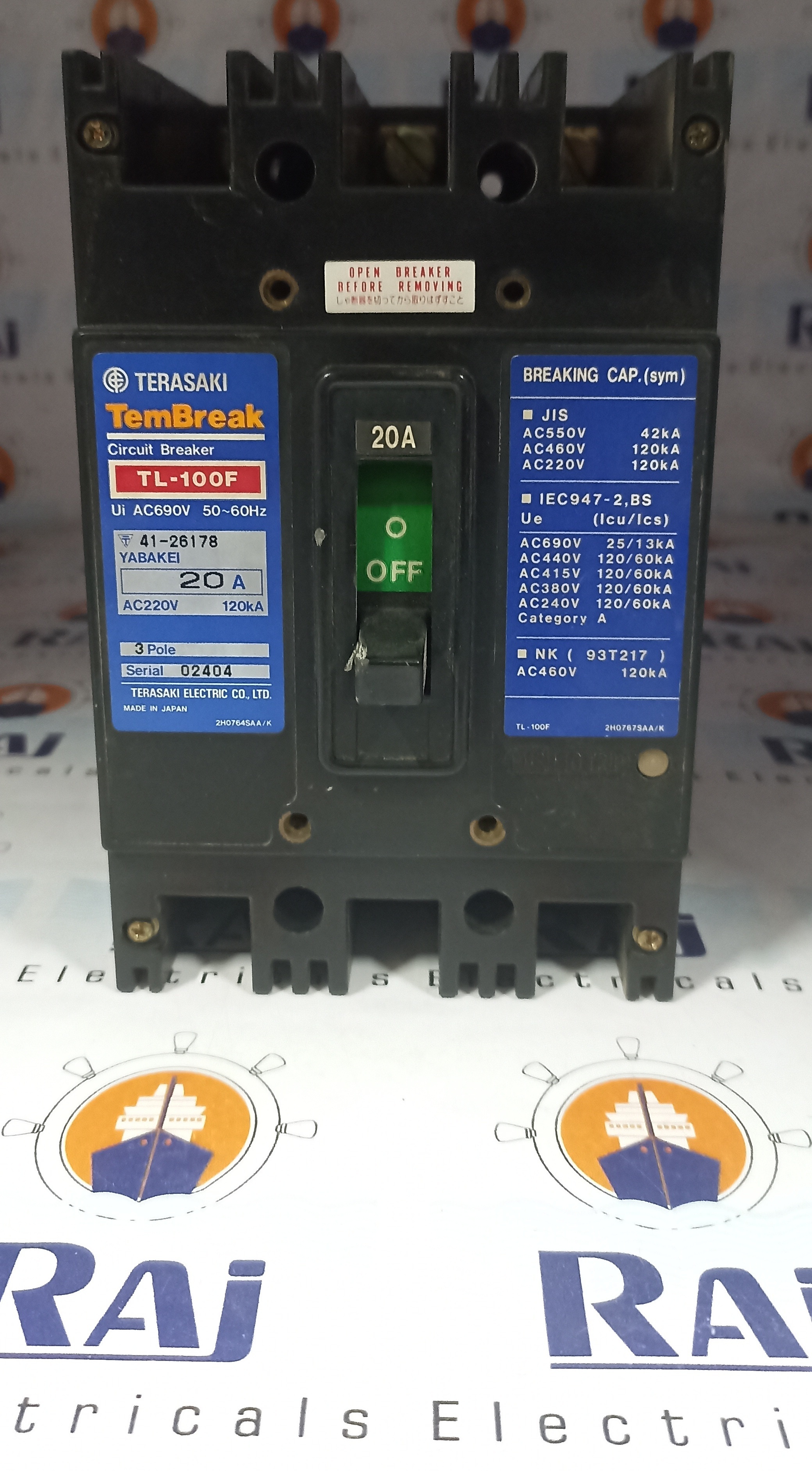
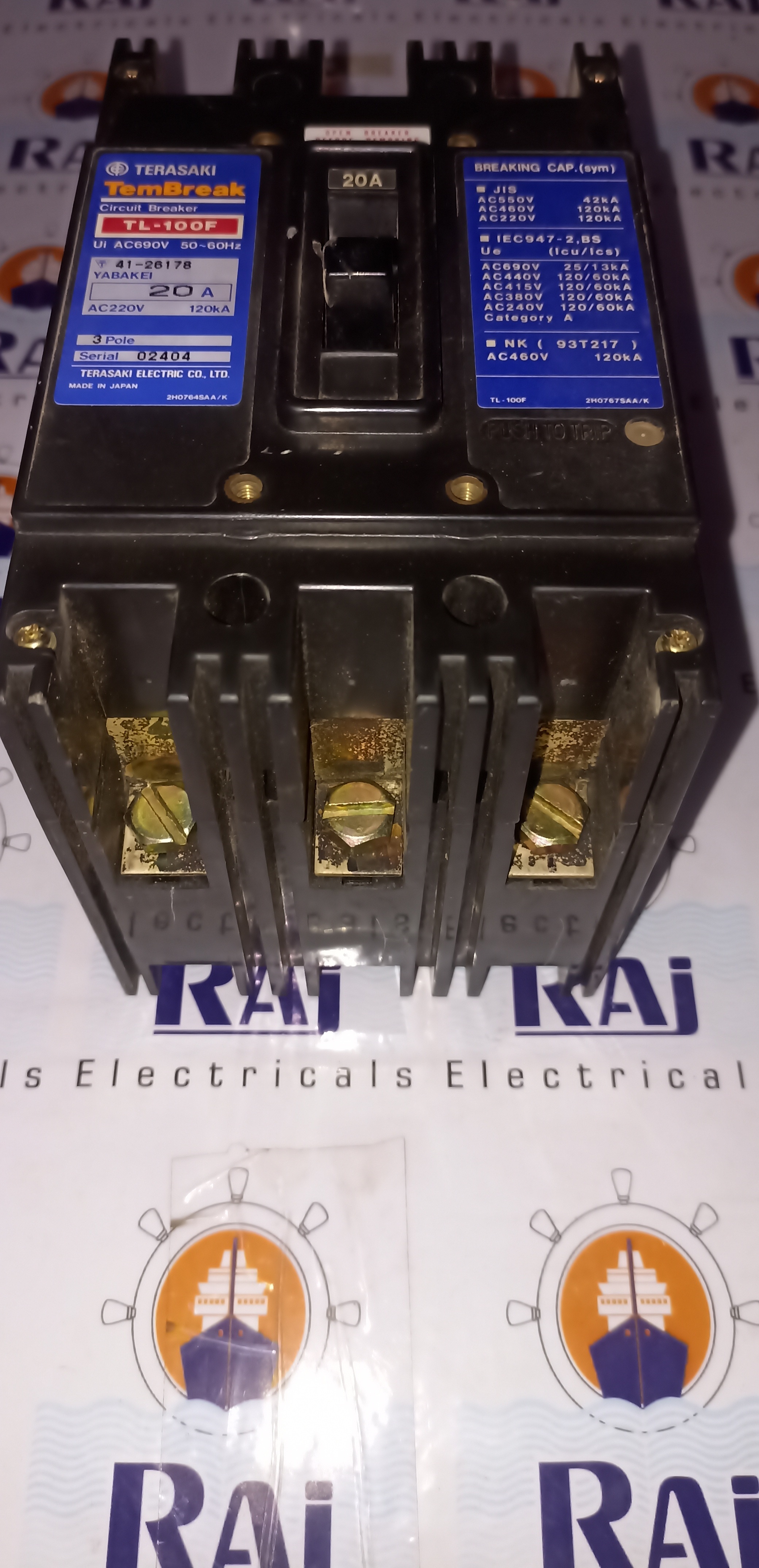
TERASAKI 20A 3P (TL-100F) MCCB
MOQ : 5 Pieces
TERASAKI 20A 3P (TL-100F) MCCB Specification
- Breaking Capacity
- 25kA at 415V AC
- Mechanical Life
- 10,000 operations
- Rated Short Circuit Making Current
- 25kA
- Rated Short Circuit Breaking Current
- 25kA
- Phase
- Three Phase
- Product Type
- Molded Case Circuit Breaker (MCCB)
- Installation Options
- Panel Mounting
- Function
- Overload & Short Circuit Protection
- Poles Number
- 3 Poles
- Rated Voltage
- AC 415V
- Rated Current
- 20A
- Rated Frequency
- 50/60 Hz
- Curves
- C Curve
- Temperature Protection
- Yes
- Weight
- Approx. 650g
- Color
- Grey
- Terminal Type
- Box type terminals
- Enclosure Material
- High strength, flame-retardant plastic
- Standards
- IEC 60947-2 compliant
- Mounting Orientation
- Any position
- Trip Unit
- Thermal Magnetic
- Model
- TL-100F
- Ambient Temperature Range
- -5C to +40C
- Utilization Category
- AC-22A
TERASAKI 20A 3P (TL-100F) MCCB Trade Information
- Minimum Order Quantity
- 5 Pieces
- Payment Terms
- Cash in Advance (CID), Cheque, Telegraphic Transfer (T/T)
- Sample Available
- Yes
- Main Export Market(s)
- Asia, Middle East, Africa
- Main Domestic Market
- All India
About TERASAKI 20A 3P (TL-100F) MCCB
Raj Electricals Offering Terasaki 20A 3P (TL-100F) MCCB At Bhavnagar, Gujarat, India.
We are engaged in the supply, dealing, distribution, export and import of the widest range of electrical and electronic items that would suit every type of project, economy and medium.
Product Specification :-
Type :- MCCB (Moulded Case Circuit Breaker)
Make :- Terasaki
Ampere :- 20A
Pole :- 3P
Model :- TL-100F
Condition :- Refurbished
Breaking Capacity :- 42 kA
Voltage :- 415V AC
Frequency :- 50-60 Hz
For More Details
WhatsApp or call on :- +919426838080, +919904838080.
YouTube : https://www.youtube.com/@rajelectricals5253
Google : https://g.co/kgs/WCmt5a
Instagram : https://www.instagram.com/rajelectric52/
Facebook : https://www.facebook.com/RajElectricals52/
Website : https://www.rajelectrics.com/
Versatile Protection for Your Electrical Systems
The TERASAKI 20A 3P (TL-100F) MCCB efficiently safeguards three-phase electrical circuits from overload and short circuit risks. Designed for flexibility, it functions effectively across a wide ambient temperature range and can be mounted in any orientation, making it well-suited for varied industrial and commercial scenarios. Its C Curve tripping ensures sensitive yet selective circuit interruption, reducing downtime while maximizing reliability.
Durable Construction with Enhanced Safety
Constructed from high-strength, flame-retardant plastic, the TL-100F ensures both operational durability and user safety. The enclosure material meets rigorous industry standards, offering resilience against mechanical impacts and electrical fires. Its robust build, combined with a reliable thermal magnetic trip mechanism, delivers consistent protection and a long mechanical lifespan of up to 10,000 operations.
FAQ's of TERASAKI 20A 3P (TL-100F) MCCB:
Q: How does the TERASAKI TL-100F MCCB provide protection for electrical circuits?
A: The TL-100F MCCB protects electrical circuits with a thermal magnetic trip unit, offering reliable detection and interruption during overloads and short circuits. Its C Curve tripping characteristic ensures that normal inrush currents don't cause nuisance tripping, while promptly disconnecting during actual faults.Q: What are the installation options for the TERASAKI 20A 3P MCCB?
A: This MCCB offers versatile installation, designed for panel mounting and allowing for any orientation. Its box-type terminals simplify secure wiring, making it suitable for both new setups and retrofit applications in industrial or commercial electrical panels.Q: Where can the TL-100F MCCB be used effectively?
A: The TL-100F MCCB is ideal for use in three-phase AC systems up to 415V, particularly in industrial, commercial, and infrastructure settings requiring robust overload and short circuit protection. It is also suitable for applications where reliability, flexibility, and high breaking capacity are essential.Q: What are the main benefits of using a TL-100F MCCB in my system?
A: By integrating the TL-100F MCCB, you gain enhanced protection against circuit faults, a long mechanical lifespan, and safe operation across a wide temperature range. Its high breaking capacity (25kA at 415V AC) and compliance with IEC 60947-2 ensure system safety and regulatory adherence.Q: How does the thermal magnetic trip unit function in protecting equipment?
A: The thermal magnetic trip unit combines thermal sensing for overloads and magnetic sensing for short circuits. It automatically disconnects the circuit when prolonged overcurrent or immediate high fault currents are detected, minimizing equipment damage and fire risks.Q: When should the MCCB be replaced or inspected?
A: Periodic inspection is recommended, especially after a fault event or if the breaker has approached its mechanical operation limit (10,000 cycles). Replace immediately if the MCCB shows signs of physical damage, irregular operation, or persistent tripping under normal loads.Q: What is the process to install the TL-100F MCCB in a panel?
A: To install, first ensure power is isolated. Mount the MCCB securely on the panel, connect the incoming and outgoing wires to the box-type terminals, and tighten appropriately. Confirm all connections before re-energizing the system and performing functional checks.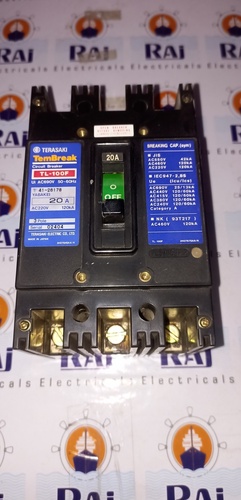
Tell us about your requirement

Price:
Quantity
Select Unit
- 50
- 100
- 200
- 250
- 500
- 1000+
Additional detail
Mobile number
Email

More Products in MCCB(Molded Case Circuit Breaker) Category
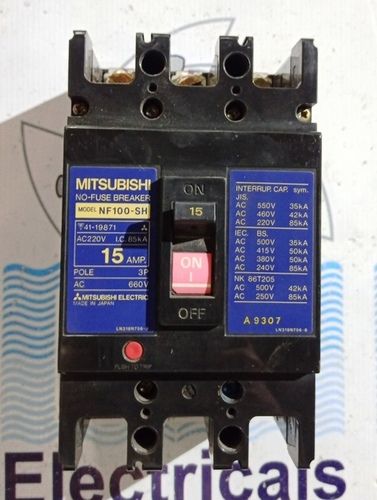
MITSUBISHI (NF100 - SH) 15 AMP MCCB
Minimum Order Quantity : 100 Pieces
Rated Voltage : AC 415V
Color : Grey
Phase : Three Phase
Rated Frequency : 50/60 Hz
Product Type : Other, Moulded Case Circuit Breaker (MCCB)
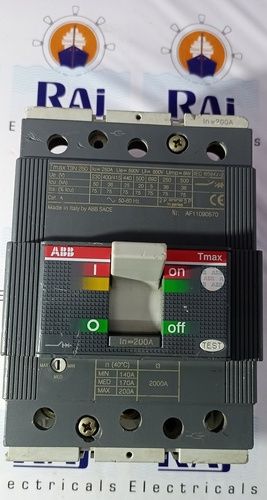
ABB SACE TMAX 200A 3P MCCB
Minimum Order Quantity : 5 Pieces
Rated Voltage : 415V AC
Color : Grey/Black
Phase : Three Phase
Rated Frequency : 50/60 Hz
Product Type : Other, Molded Case Circuit Breaker (MCCB)
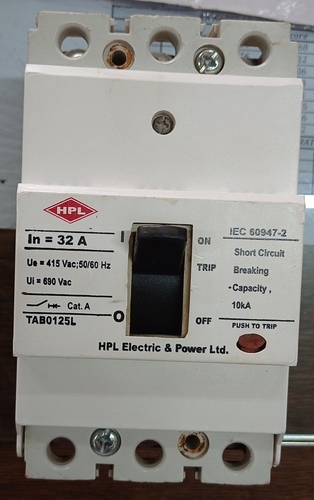
HPL 32A 3P MCCB
Minimum Order Quantity : 5
Rated Voltage : 415V AC
Color : Grey/White
Phase : Three Phase
Rated Frequency : 50/60 Hz
Product Type : Other, Molded Case Circuit Breaker (MCCB)
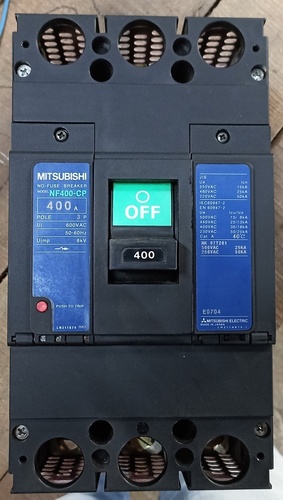
MITSUBISHI 400A 3P MCCB
Minimum Order Quantity : 5 Pieces
Rated Voltage : 220 Volt(v)
Color : White
Phase : other, Single
Rated Frequency : 50/60 Hertz(Hz)
Product Type : Mini

RAJ ELECTRICALS
GST : 24AAJFR5875M2ZH
Contact Details

- Talavadi Char Rasta, Alka Cinema Road, Opp. Imamwada Masjid, Bhavnagar - 364001, Gujarat, India

- Mr Murtuza Chhatariya (Proprietor)
- Mobile :08045813766

 Send Inquiry
 Send SMS
RAJ ELECTRICALS
All Rights Reserved.(Terms of Use)
Developed and Managed by Infocom Network Private Limited.
Developed and Managed by Infocom Network Private Limited.
 English
 Spanish
 French
 German
 Italian
 Chinese (Simplified)
 Japanese
 Korean
 Arabic
 Portuguese