Welcome Our Company!


 Send Inquiry
HPL SOCOMEC 1600A CHANGE OVER SWITCH
MOQ : 100 Pieces
HPL SOCOMEC 1600A CHANGE OVER SWITCH Specification
- Circuit Type
- AC
- Finish Type
- Matt Finish
- Response Time
- Instantaneous, manually operated
- Number of Module
- Modular
- Automation Grade
- Manual
- Protection Level
- IP20
- Temperature Range
- -25C to +70C
- Max. Current
- 1600A
- Mechanical Life
- > 5000 operations
- Rated Voltage
- 690V/1000V AC
- Product Type
- Change Over Switch
- Material
- High-grade Thermoplastic Housing, Copper Contacts
- Insulation Resistance
- > 1000 M at 500V DC
- Contact Resistance
- < 20
- Max. Voltage
- 1000V AC
- Operating Temperature
- -5C to +40C
- Stoke
- 3 positions (I-O-II)
- Size
- Standard Panel Mount (As per manufacturer)
- Color
- Grey/Black
- Weight
- Approx. 18 kg
- Mounting Type
- Panel Mount/Surface Mount
- Current Rating
- 1600A
- No Of Poles
- 4 Pole
- Handle Type
- Rotary, Front Operated
- Short Time Withstand Current (Icw)
- 20 kA for 1 sec
- Auxiliary Contact Option
- Available (Optional)
- Rated Impulse Withstand Voltage
- 12kV
- Utilization Category
- AC-23A
- Frequency
- 50/60 Hz
- Switching Mode
- OFF-ON-ON (Change Over)
- Connection Type
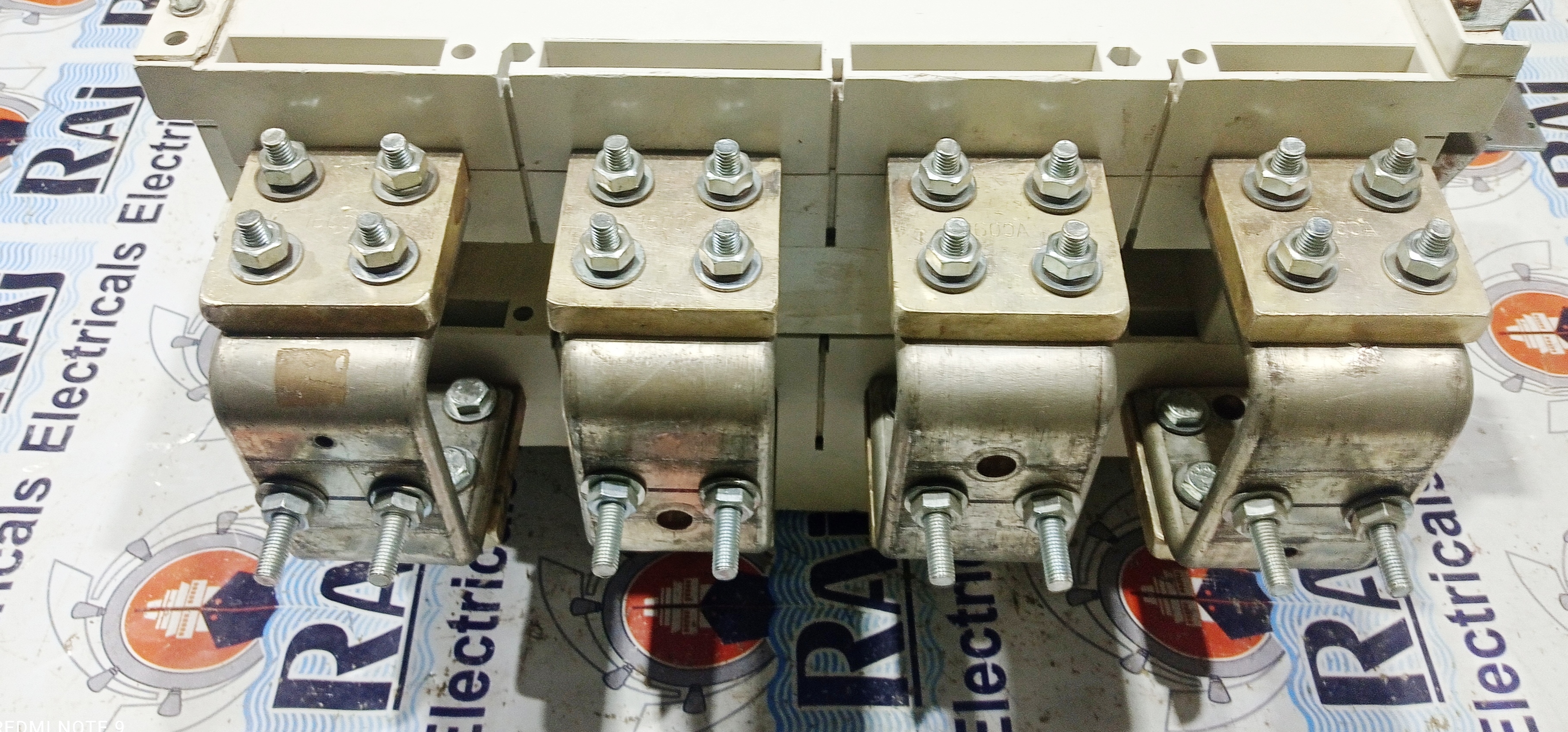
- Screw Terminal
- Torque for Terminal
- 22 Nm Max
- Applications
- Main Power & Generator Changeover in Industrial & Commercial Installations
HPL SOCOMEC 1600A CHANGE OVER SWITCH Trade Information
- Minimum Order Quantity
- 100 Pieces
- Supply Ability
- 1000 Pieces Per Day
- Delivery Time
- 2 Days
- Sample Available
- Yes
- Main Domestic Market
- All India
About HPL SOCOMEC 1600A CHANGE OVER SWITCH
A changeover switch is designed to transfer a house (or business) electricity from the commercial power grid to a local generator when n outage occurs. Also known as atransfer switches,a they connect directly to the generator, commercial power supply or line, and the house.Superior Safety and Robust Design
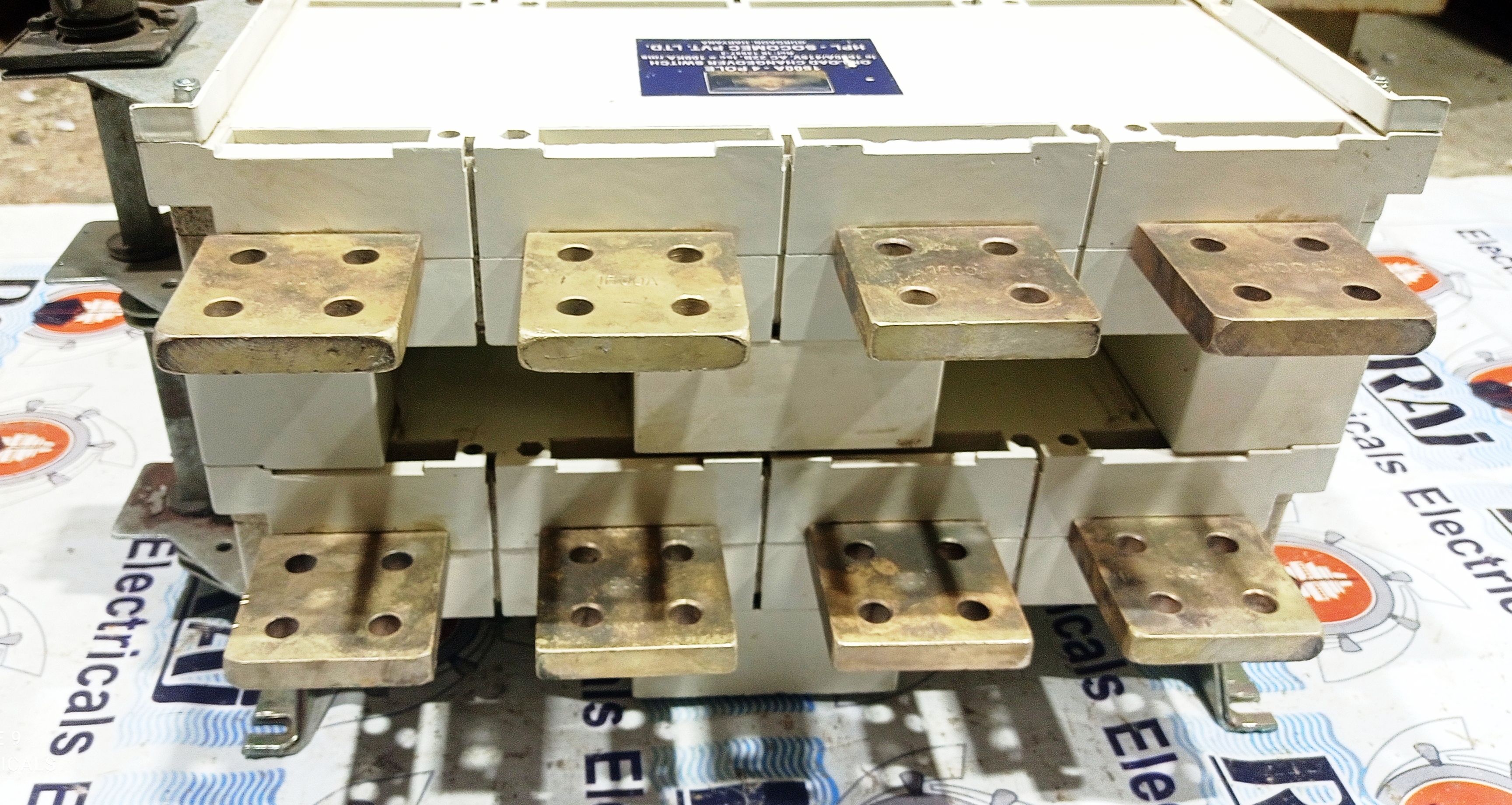
Equipped with a high-grade thermoplastic housing and copper contacts, the HPL SOCOMEC 1600A Change Over Switch provides outstanding insulation resistance and minimal contact resistance, enhancing both safety and performance. Its IP20 protection level and reliable mechanical build ensure effective isolation and long service life, making it ideal for mission-critical settings.
Versatile Power Switching for Industrial Needs
This change over switch is designed for main power and generator change-over applications in challenging industrial and commercial environments. The 4-pole configuration, rotary handle, and modular design make installation simple, while the OFF-ON-ON switching mode ensures seamless power transfer and operational continuity during maintenance or outages.
FAQ's of HPL SOCOMEC 1600A CHANGE OVER SWITCH:
Q: How is the HPL SOCOMEC 1600A Change Over Switch utilized in industrial and commercial installations?
A: It is used to switch power between the main supply and a generator, ensuring uninterrupted operation during maintenance or emergencies. Its AC-23A category and high current rating make it suitable for heavy-duty loads in such environments.Q: What process should be followed to install this change over switch?
A: The switch should be panel or surface mounted as per the standard panel size, with screw terminals tightened to a torque of up to 22 Nm. Connections must adhere to rated voltage and current specifications, and optional auxiliary contacts can be integrated if required.Q: When should the auxiliary contact option be considered for this switch?
A: Auxiliary contacts are recommended when you need remote indication, automation, or enhanced monitoring of the switch position within your control system. They are especially beneficial in complex power distribution setups.Q: Where is the switch typically installed for optimal safety and efficiency?
A: The switch is ideally installed within a secure electrical panel or switchgear in a centralized, accessible location. This ensures compliance with safety regulations and provides ease of operation during power changeover events.Q: What are the benefits of using a front-operated rotary handle on this switch?
A: The rotary handle design allows for safe, intuitive, and rapid manual operation during change-over, reducing response time and minimizing risk during critical switching tasks.Q: How does the switch ensure safety and reliability during operation?
A: Safety and reliability are ensured by robust insulation (>1000 M at 500V DC), low contact resistance (<20 ), high impulse withstand voltage, and durable mechanical construction, meeting stringent industrial standards.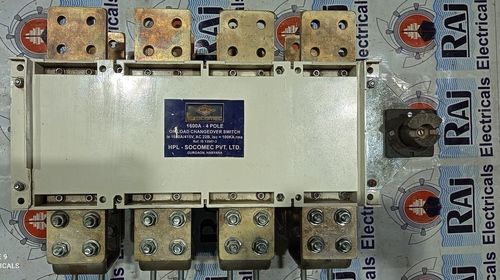

Tell us about your requirement

Price:
Quantity
Select Unit
- 50
- 100
- 200
- 250
- 500
- 1000+
Additional detail
Mobile number
Email

More Products in Changeover Switches Category
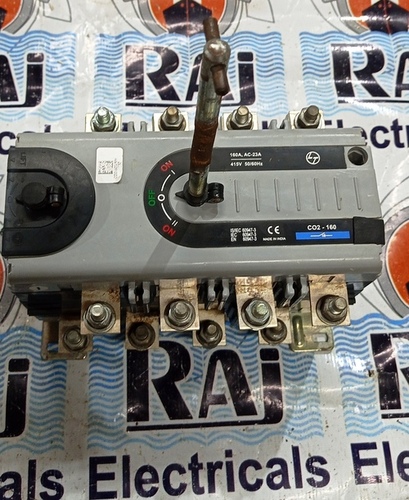
L&T CO2 160A CHANGEOVER SWITCH
Price Range 50.00 - 500.00 INR / Piece
Minimum Order Quantity : 100 Pieces
Operating Temperature : 20C to +55C
Color : Grey & Black
No Of Poles : Four pole
Temperature Range : 20C to +55C
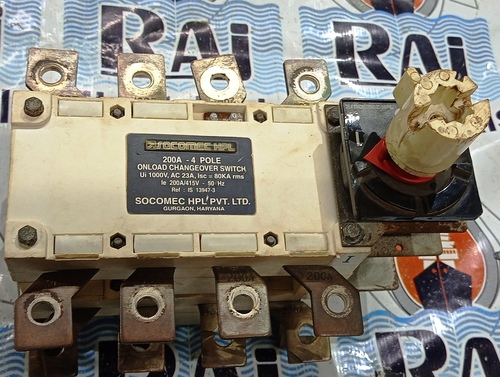
SOCOMEC HPL 200A CHANGEOVER SWITCH
Price Range 50.00 - 500.00 INR / Piece
Minimum Order Quantity : 100 Pieces
Operating Temperature : 25C to +70C
Color : Grey/Black
No Of Poles : 4
Temperature Range : 25C to +70C
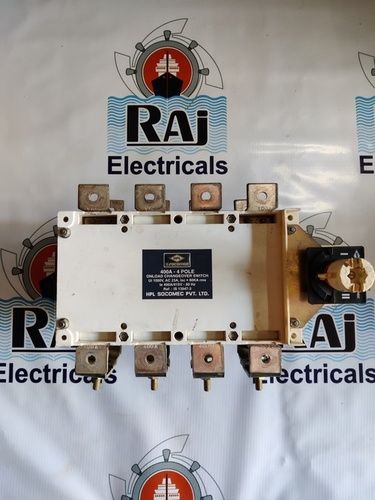
SOCOMEC HPL 400A CHANGEOVER SWITCH
Price Range 50.00 - 500.00 INR / Piece
Minimum Order Quantity : 100 Pieces
Operating Temperature : 25C to +70C
Color : Grey / Black
No Of Poles : 4 Pole
Temperature Range : 25C to +70C
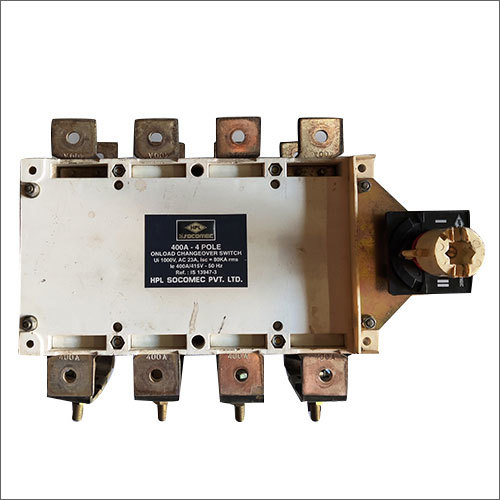
400A 4 Pole on Load Changeover Switch
Price Range 50.00 - 500.00 INR / Piece
Minimum Order Quantity : 100 Pieces
Operating Temperature : 25C to +55C
Color : Grey & Black
No Of Poles : 4 Pole
Temperature Range : 25C to +55C

RAJ ELECTRICALS
GST : 24AAJFR5875M2ZH
Contact Details

- Talavadi Char Rasta, Alka Cinema Road, Opp. Imamwada Masjid, Bhavnagar - 364001, Gujarat, India

- Mr Murtuza Chhatariya (Proprietor)
- Mobile :08045813766

 Send Inquiry
 Send SMS
RAJ ELECTRICALS
All Rights Reserved.(Terms of Use)
Developed and Managed by Infocom Network Private Limited.
Developed and Managed by Infocom Network Private Limited.
 English
 Spanish
 French
 German
 Italian
 Chinese (Simplified)
 Japanese
 Korean
 Arabic
 Portuguese