Welcome Our Company!


 Send Inquiry
ABB SACE TMAX 100A 4P MCCB
MOQ : 5 Pieces
ABB SACE TMAX 100A 4P MCCB Specification
- Rated Short Circuit Making Current
- 50 kA
- Phase
- Three Phase
- Mechanical Life
- 10,000 cycles
- Rated Short Circuit Breaking Current
- 25 kA at 415V AC
- Breaking Capacity
- 25 kA
- Product Type
- Moulded Case Circuit Breaker (MCCB)
- Installation Options
- Din-Rail or Panel Mounting
- Function
- Protection against overload and short circuit
- Poles Number
- 4P
- Rated Voltage
- 415V AC
- Rated Current
- 100A
- Rated Frequency
- 50/60 Hz
- Curves
- C Curve
- Temperature Protection
- Provided
- Weight
- 1.9 kg
- Color
- Grey & Black
- Connection Capacity
- Up to 70mm2 (cable)
- Degree of Protection
- IP20
- Insulation Voltage (Ui)
- 750V
- Trip Unit
- Thermal Magnetic
- Frame Size
- T4
- Mounting Position
- Any
- Terminal Type
- Fixed
- Ambient Operating Temperature
- -25C to +70C
- Service Breaking Capacity (Ics)
- 100% of Icu
- Utilization Category
- AC-22A
- Standards Compliance
- IEC 60947-2
- Auxiliary Contacts
- Optional (accessory)
ABB SACE TMAX 100A 4P MCCB Trade Information
- Minimum Order Quantity
- 5 Pieces
- Payment Terms
- Cash Advance (CA), Cash in Advance (CID), Cheque, Letter of Credit (L/C)
- Sample Available
- Yes
- Main Export Market(s)
- Asia, Middle East, Africa
- Main Domestic Market
- All India
About ABB SACE TMAX 100A 4P MCCB
Raj Electricals Offering ABB SACE TMAX 100A 4P MCCB At Bhavnagar, Gujarat, India.
We are engaged in the supply, dealing, distribution, export and import of the widest range of electrical and electronic items that would suit every type of project, economy and medium.
Product Specification :-
Type :- MCCB (Moulded Case Circuit Breaker)
Make :- ABB
Ampere :- 100A
Pole :- 4P
Model :- SACE TMAX
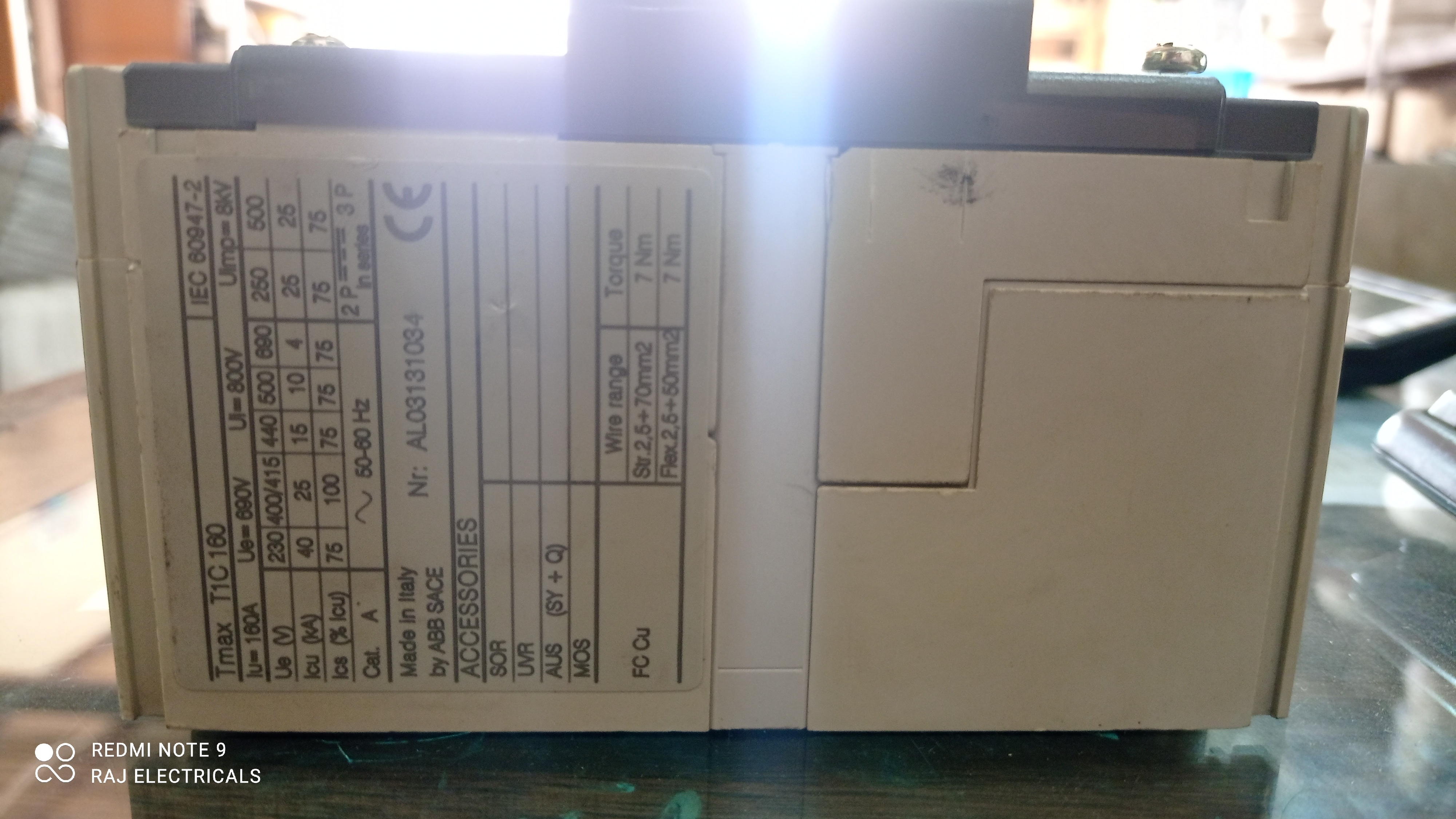
Model Number :- Tmax T1C 160
Condition :- Refurbished
Breaking Capacity :- 25 kA
Voltage :- 415V AC
Frequency :- 50-60 Hz
For More Details
Whats App or call on :- +919426838080, +919904838080.
YouTube : https://www.youtube.com/@rajelectricals5253
Google : https://g.co/kgs/WCmt5a
Instagram : https://www.instagram.com/rajelectric52/
Facebook : https://www.facebook.com/RajElectricals52/
Website : https://www.rajelectrics.com/
Reliable Protection for Modern Power Systems
The ABB SACE TMAX 100A 4P MCCB offers assured protection against both overload and short-circuit events, ensuring the safety and continuity of your electrical installations. Its C curve tripping characteristics provide sensitive response to fault conditions while minimizing unnecessary interruptions. This breaker supports mechanical endurance up to 10,000 cycles, reflecting its durability in demanding operational environments.
Versatile Installation and Operation
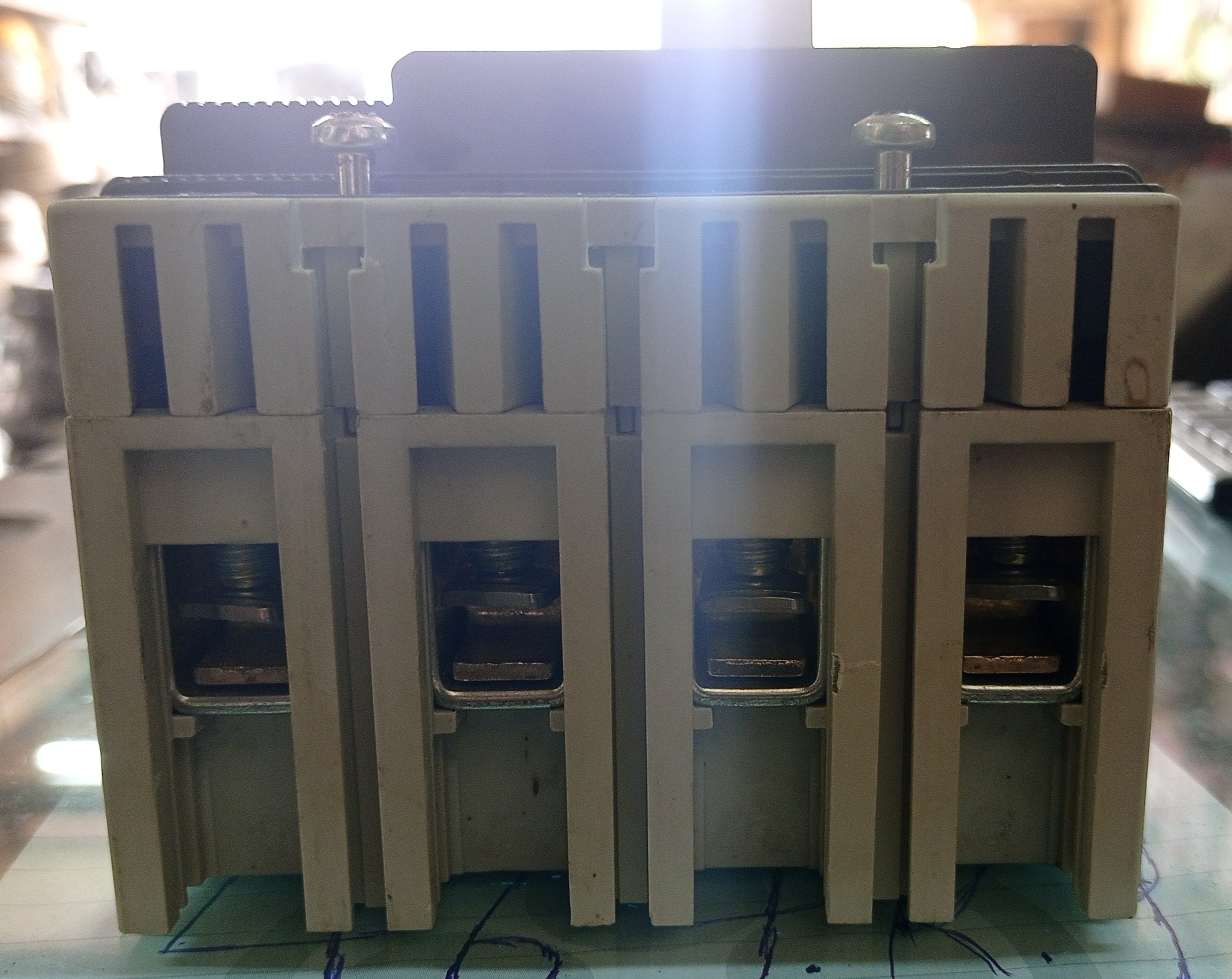
This MCCB is adaptable for various mounting arrangements, including DIN-rail and panel mounting, and operates flawlessly in any position. Its rated current of 100A, coupled with a service breaking capacity that matches the ultimate breaking capacity (25 kA at 415V), enables reliable performance for three-phase AC systems. The device's fixed terminal design accommodates cable connections up to 70mm2 for simplified installation.
FAQ's of ABB SACE TMAX 100A 4P MCCB:
Q: How is the ABB SACE TMAX 100A 4P MCCB typically installed?
A: The MCCB can be installed using either DIN-rail or panel mounting methods, offering flexibility for integration into different electrical distribution boards or panels. It is designed to operate effectively in any mounting position, ensuring ease of installation and adaptability on-site.Q: What standard does this MCCB comply with and why is it important?
A: The MCCB complies with IEC 60947-2, which defines the safety, performance, and testing conditions for circuit breakers used in low-voltage systems. This compliance assures users of internationally recognized reliability and product quality.Q: When should the ABB SACE TMAX MCCB be used in an application?
A: It is ideal for protecting three-phase electrical systems where a 100A, 4-pole breaker with high breaking capacity (25 kA) is required. Its robust design makes it suitable for industrial, commercial, and infrastructure projects, particularly where operational temperatures can range between -25C and +70C.Q: Where can auxiliary contacts be added to the MCCB, and what is their advantage?
A: Auxiliary contacts are available as an optional accessory and can be integrated with the MCCB as needed. They facilitate remote signaling and monitoring of the breaker's operation, enhancing system control and automation capabilities.Q: What is the process for connecting cables to this MCCB?
A: The fixed terminal design allows direct connection of cables up to 70mm2. Properly strip and prepare the cable ends, ensuring secure and reliable tightening of the terminal screws to maintain optimal electrical contact and safety.Q: What are the main benefits of using the ABB SACE TMAX 100A 4P MCCB?
A: Primary benefits include superior protection against overloads and short circuits, compliance with international standards, high mechanical life (10,000 cycles), and versatility in installation. Its high service and breaking capacities ensure dependable interruption of fault currents, protecting equipment and personnel.Q: How does the breaker ensure operational safety in high-temperature environments?
A: With an ambient operating range of -25C to +70C, the MCCB is engineered to perform reliably under extreme temperature conditions. Integrated temperature protection mechanisms prevent tripping due to abnormal thermal rise, ensuring consistent performance.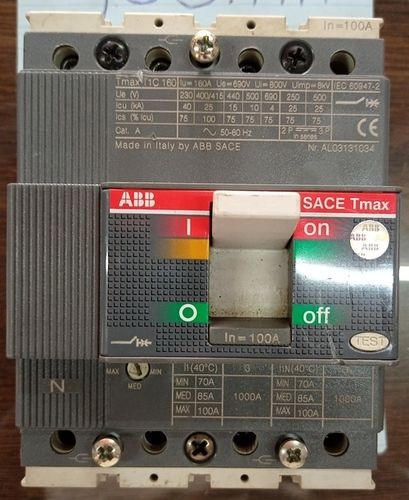
Tell us about your requirement

Price:
Quantity
Select Unit
- 50
- 100
- 200
- 250
- 500
- 1000+
Additional detail
Mobile number
Email

More Products in MCCB(Molded Case Circuit Breaker) Category
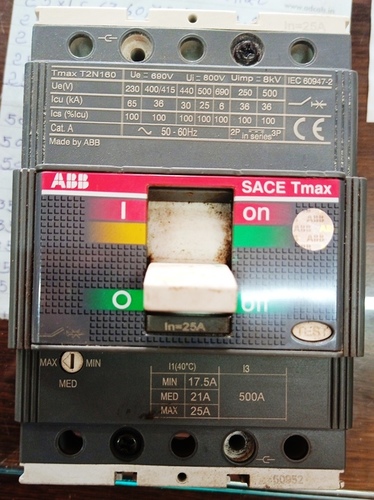
ABB SACE TMAX 25 AMP MCCB
Minimum Order Quantity : 100 Pieces
Mechanical Life : 20,000 operations
Rated Frequency : 50/60 Hz
Rated Current : 25A
Product Type : Other, Moulded Case Circuit Breaker (MCCB)
Phase : Three Phase
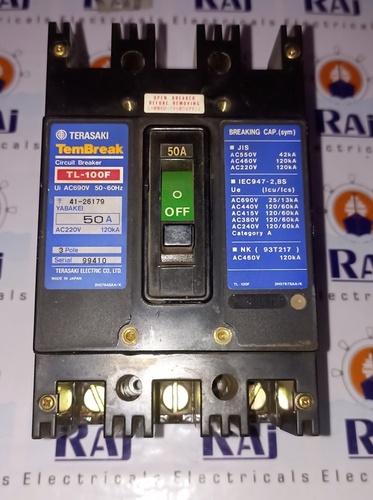
TERASAKI (TL-100F) 50A 3P MCCB
Minimum Order Quantity : 5 Pieces
Mechanical Life : 10,000 Operations
Rated Frequency : 50/60 Hz
Rated Current : 50A
Product Type : Other, Moulded Case Circuit Breaker (MCCB)
Phase : Three Phase
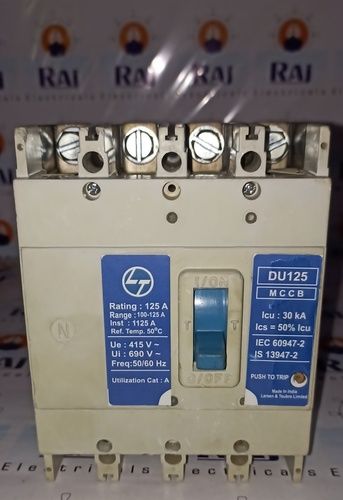
LT (DU125) 125A 4P MCCB
Minimum Order Quantity : 2 Pieces
Mechanical Life : 10,000 Operations
Rated Frequency : 50/60 Hz
Rated Current : 125A
Product Type : Other, Moulded Case Circuit Breaker (MCCB)
Phase : Three Phase
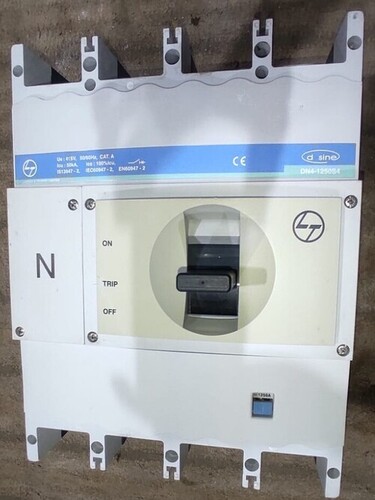
LT 1250A 4P MCCB
Minimum Order Quantity : 1 Piece
Mechanical Life : Operating Cycles: 10,000
Rated Frequency : 50/60 Hz
Rated Current : 1250A
Product Type : Other, Moulded Case Circuit Breaker (MCCB)
Phase : Three Phase

RAJ ELECTRICALS
GST : 24AAJFR5875M2ZH
Contact Details

- Talavadi Char Rasta, Alka Cinema Road, Opp. Imamwada Masjid, Bhavnagar - 364001, Gujarat, India

- Mr Murtuza Chhatariya (Proprietor)
- Mobile :08045813766

 Send Inquiry
 Send SMS
RAJ ELECTRICALS
All Rights Reserved.(Terms of Use)
Developed and Managed by Infocom Network Private Limited.
Developed and Managed by Infocom Network Private Limited.
 English
 Spanish
 French
 German
 Italian
 Chinese (Simplified)
 Japanese
 Korean
 Arabic
 Portuguese